Why your salad is boring (and the five-minute fix)
A bad salad is almost never a vegetable problem. It is a seasoning problem, a texture problem, and a temperature problem — all of which are fixable tonight.

Arun Pillai
Executive Chef
6 min read
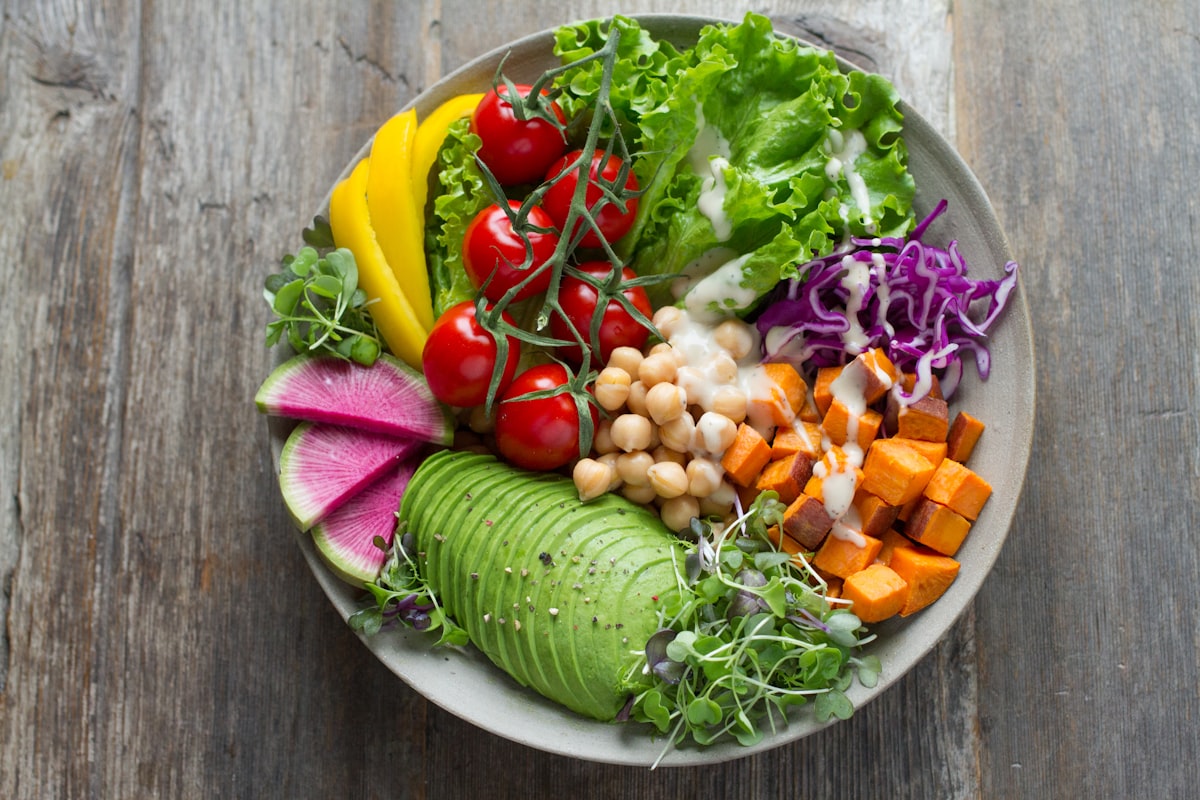
People tell me they do not like salad roughly once a week. They are almost always wrong. What they do not like is undressed lettuce in a plastic box, which is a fair thing to dislike. A salad is not a health obligation with leaves in it. It is a dish, and dishes have rules.
After fifteen years of cooking professionally, I have found that nearly every disappointing salad fails on one of three axes. Fix them in order and the problem usually disappears before you reach the third.
1. You are not salting the leaves
You would never serve unsalted potatoes. Yet most home cooks dress a salad and never season it. Salt does not just add saltiness — it draws a little moisture to the surface of the leaf, which helps the dressing cling instead of pooling at the bottom of the bowl.
Salt the leaves lightly before the dressing goes on. Flaky salt if you have it, and add it at the last possible second, because salt and time will wilt your greens into a sad puddle.
2. Every ingredient has the same texture
This is the one that separates a restaurant salad from a home one. Your mouth gets bored quickly. If every element is soft, the dish reads as mush regardless of how good the produce is.
- Something crisp: romaine, cucumber, radish, fennel
- Something creamy: avocado, feta, burrata, a soft-boiled egg
- Something crunchy: toasted nuts, seeds, croutons, crisp chickpeas
- Something sharp: pickled onion, capers, citrus segments
Hit three of those four and the salad will feel composed rather than assembled. This is not a matter of taste; it is a matter of contrast.
“A salad without acid is just a cold vegetable arrangement. Acid is what makes your mouth water and asks for the next bite.”
3. Your dressing has no acid
The classic ratio is three parts oil to one part acid. It is also, in my opinion, wrong for most salads. I work closer to two to one, sometimes 1.5 to one for rich bowls carrying cheese or meat. The fat coats your tongue; the acid cuts through and resets it.

Taste your dressing on a leaf, not off a spoon. On a spoon it will always taste too sharp. On a leaf it will taste like dinner.
The temperature rule nobody mentions
Cold leaves, room-temperature dressing. A fridge-cold vinaigrette seizes the oil and refuses to coat anything. We pull dressings out twenty minutes before service for exactly this reason, and it is the single easiest upgrade you can make at home tonight.